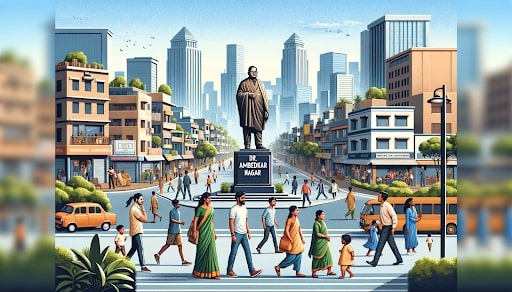
Introduction to Dr. Ambedkar Nagar
Dr. Ambedkar Nagar, also known as Mhow, is a city with a story. It sits on India’s Malwa Plateau, where two big rivers, the Chambal and the Narmada, begin. This city wasn’t always called Dr. Ambedkar Nagar. It got its new name to honor a great man, Bhimrao Ramji Ambedkar, who fought for the rights of people and was born here.
History and Origin
Back in 1818, a man named John Malcolm founded this place. It was a special spot for the British army, known as a cantonment. Even today, it’s an important military spot with a small fort and camp. This place has seen many years go by and has stories from the time when India was under British rule.
|
Year |
Event |
Significance |
|
1818 |
Founding of Mhow |
John Malcolm established Mhow as a British cantonment, marking the beginning of its historical journey. |
|
2012 |
Renaming to Dr. Ambedkar Nagar |
To honor the legacy of Bhimrao Ambedkar, a leader born here, the city was renamed, reflecting its commitment to social justice. |
Geography and Climate
Dr. Ambedkar Nagar is up on a plateau, which means it’s like a flat table of land higher than the area around it. The weather here is usually warm, but it can get cool at night. The city sees all the seasons: a hot summer, a wet monsoon, and a cool winter.
Economy and Livelihood
People in Dr. Ambedkar Nagar work in different jobs, but many are involved in dairy farming. This means they keep cows and buffaloes to sell milk. It’s a big part of the city’s business. There are also other jobs, but farming is a key way people make their living here.
|
Industry |
Details |
Impact on City |
|
Dairy Farming |
Many families own cows and buffaloes, selling milk to make money. |
It’s a major source of income and provides jobs for the locals. |
Education
Education is a big deal in Dr. Ambedkar Nagar. The city is proud of its university named after Dr. B.R. Ambedkar. It’s a place where students learn about social sciences and how to make society better. There are also other colleges that are part of bigger universities, helping students learn various subjects.
|
Institution |
Focus Area |
Contribution to Education |
|
Dr. B.R. Ambedkar University |
Social Sciences |
It’s a hub for learning about society and how to improve it, drawing students from all over. |
Healthcare Facilities
When it comes to health, the city has hospitals and clinics to take care of its people. These places make sure that everyone can get help when they’re sick and provide regular health check-ups.
Banking and Finance
Banks are important in Dr. Ambedkar Nagar. They keep money safe and help people with loans when they need to buy something big, like a house or start a business. The city has several banks that help keep the economy running smoothly.
Culture and Festivals
One of the happiest times in the city is during the Bhujariya festival. It’s a time when people celebrate with a special feast made from barley. The city also has many traditions that have been around for a long time, showing the rich culture of the place.
Population and Demographics
Dr. Ambedkar Nagar is home to a diverse group of people. As of the last count, over 87,000 people live here. The city has a mix of young and old, with families that have been here for generations and newcomers seeking opportunities.
|
Year |
Population |
Details |
|
2001 |
92,364 |
The city had a bustling population, with growth driven by its historical and economic significance. |
|
2011 |
87,111 |
A slight decrease, but the city remains vibrant with a diverse demographic makeup, reflecting a rich cultural tapestry. |
Agriculture and Natural Resources
Farming is not just a job here; it’s a way of life. The fertile land around Dr. Ambedkar Nagar helps farmers grow crops like wheat and soybeans. The city doesn’t have many other natural resources, but its land is its gold, providing food and work for its people.
|
Resource |
Usage |
Importance |
|
Fertile Land |
Agriculture |
The land around Dr. Ambedkar Nagar is rich and supports the growth of various crops, sustaining the local economy and providing livelihoods. |
Tourist Attractions
Dr. Ambedkar Nagar might not be a big city, but it has its share of sights. The Swarga Mandir and the old stepwell from 1743 are places that tell stories of the past. Visitors come to see these and feel the history that shaped this city.
|
Attraction |
Feature |
Significance |
|
Swarga Mandir |
A temple with historical value. |
It’s not just a place of worship but also a monument that showcases the architectural beauty of the past. |
|
Stepwell (Baoli) |
An ancient water storage system. |
Built in 1743, this stepwell is a marvel of engineering and a window into the resourcefulness of our ancestors. |
Political Activities
Politics in Dr. Ambedkar Nagar is as vibrant as its festivals. The city has active participation in elections, with leaders who focus on growth and development. It’s a place where people’s voices are heard, and their votes shape the future.
Conclusion
Dr. Ambedkar Nagar is a small city with a big heart. It’s a place where history and modern life blend together. From its farms to its schools, and its festivals to its politics, the city pulses with energy. It’s a community that values its past while working hard for a better tomorrow.